
NanoSense

Scientific Evidence & Research Development

NanoSense Group develops investigational nano-optical sensing technologies designed to detect responses to selected chemical compounds.

Our research programmes include BreathInsight, focused on volatile organic compounds relevant to breath analysis, and Cabin Air Sensor Solutions (CASS), focused on compounds of interest in aircraft cabin-air research.

Understanding the evidence

Experimental sensor observations, independent chemical analysis and proposed future applications are presented separately.

Research status

The evidence presented below distinguishes experimental sensor observations, independent chemical analysis and proposed future clinical or operational applications.

Neither programme should be presented as a clinically validated diagnostic system or as an independently certified operational detection device.

BREATHINSIGHT

BreathInsight — Experimental VOC Sensing

Repeated experimental responses to selected volatile organic compounds

Under the scientific direction of Professor Jeremy Ramsden, the BreathInsight programme has demonstrated repeated optical sensor responses to two selected volatile organic compounds: menthol and limonene.
Successful responses have been reproduced in separate experiments using sensor heads fabricated on different occasions and nominally identical instruments.

Exploratory measurements have also been conducted in a limited range of environments outside the laboratory and with a small number of presumed healthy participants.

The sensing approach uses functional nanoporous thin-film coatings and near-infrared optical interference measurements. The interaction between the coating and the sampled compounds produces time-dependent optical responses that can be analysed digitally.

Research direction

These experiments provide a foundation for further analytical verification, engineering development and investigation of potential applications in breath analysis.

Repeatable sensor responses have been demonstrated under tested conditions, but further validation is needed to confirm specificity, performance, and clinical applicability in real-world breath analysis.

Why limonene?

Limonene was selected partly because published breath-analysis research has investigated its relationship with liver function and the clearance of dietary compounds.
The BreathInsight experiments used a short-interval limonene exposure protocol designed to produce a measurable response in presumed healthy participants.

This protocol was not designed to reproduce impaired liver metabolism or establish the presence of liver disease.

The successful experimental results therefore demonstrate a response to limonene under the conditions tested, rather than detection of liver dysfunction or cancer.

What the experiments establish

An experimental sensor response to limonene under the conditions tested.

What they do not establish

Detection of liver dysfunction, liver cancer or other diseases. The protocol was not designed to reproduce impaired liver metabolism or establish liver disease.

BREATHINSIGHT · EXPERIMENTAL DATA

Experimental Optical Response — Limonene

Figure A — Experimental Optical Sensor Response
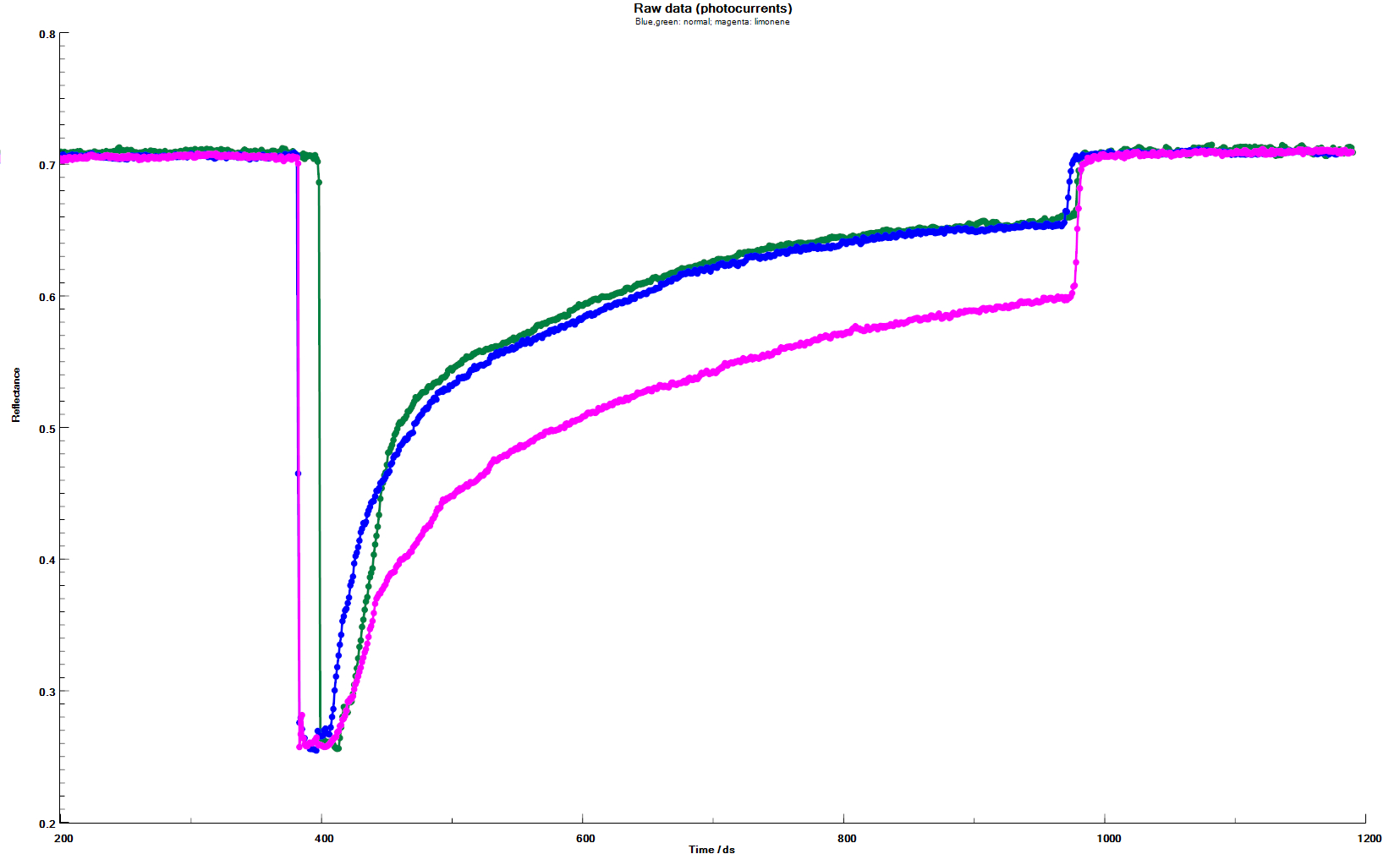
Experimental optical sensor output showing baseline exposure to ambient air, an exhalation of approximately two seconds, the subsequent sensor response over approximately 60 seconds, and an air purge before reuse. Green and blue traces represent separate water-control measurements; the magenta trace represents measurement following exposure to a limonene-rich preparation. Vertical axis: signal magnitude. Horizontal axis: time.
Raw sensor response during breath-exposure testing. The green and blue traces show successive measurements after plain water; the magenta trace shows the response following a limonene-rich preparation. The sequence includes baseline in laboratory air, approximately two seconds of exhalation, approximately 60 seconds of sensor response, and an air purge before reuse. The vertical scale represents signal magnitude and the horizontal scale time. The results do not establish clinical diagnostic performance.

Figure B — Comparison of Experimental Response Traces
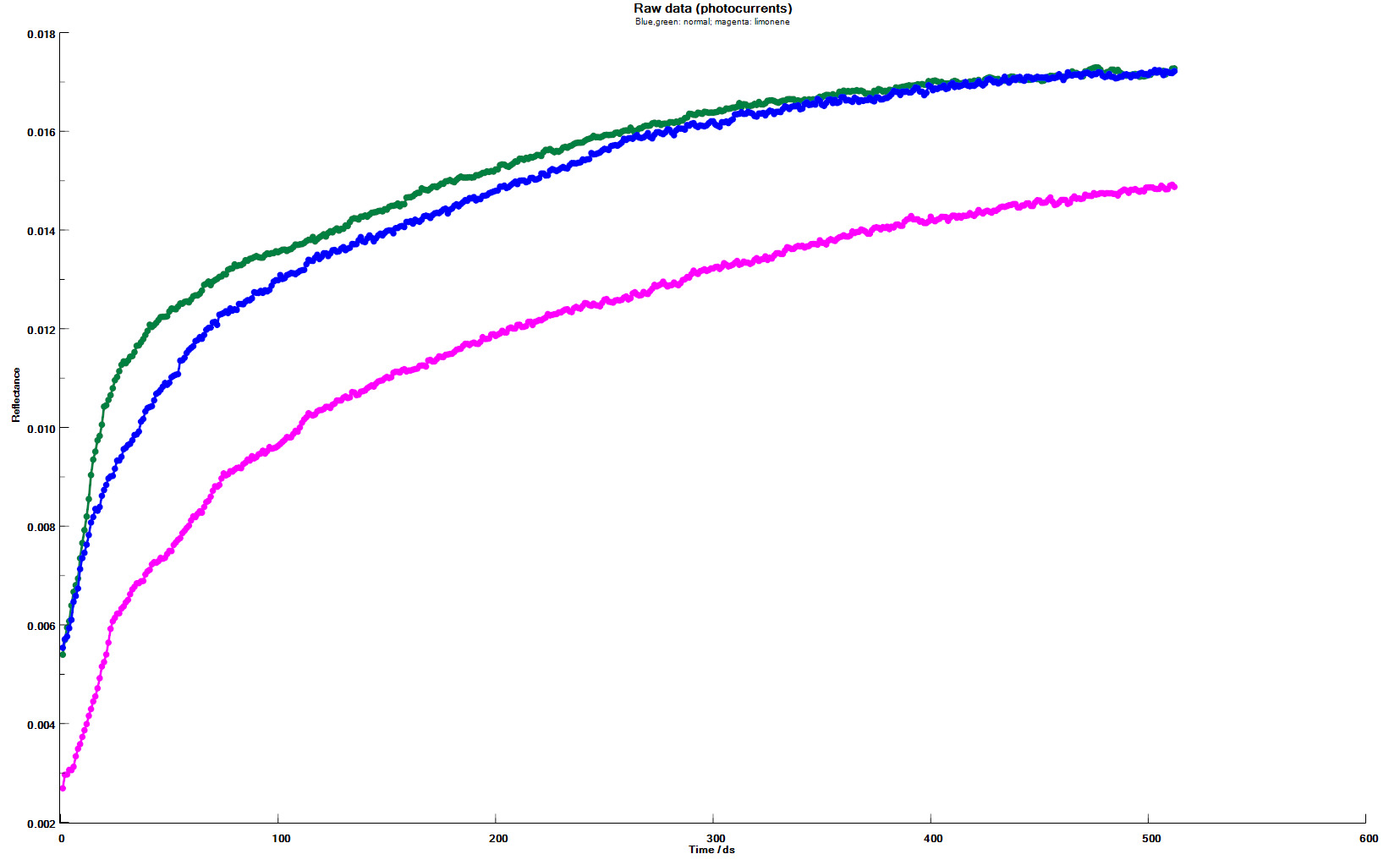
Automated extraction of the salient portions of the experimental responses shown in Figure A. The figure illustrates the distinction between variation in the two water-control traces and the substantially different response following limonene exposure.

The green and blue traces represent successive water-control measurements, while the magenta trace represents the response following exposure to a limonene-rich preparation. The comparison illustrates the relatively close agreement between the controls and the distinct limonene-associated response.

TECHNOLOGY DEMONSTRATION

17 February 2026

On 17 February 2026, BreathInsight was demonstrated to representatives of the Malta Ministry for Health.
Using a controlled limonene-exposure protocol, the instruments recorded clear differences between responses following a water-control preparation and responses following exposure to a limonene-rich preparation.
The demonstration took place in an ordinary hotel meeting room, providing an opportunity to observe the experimental sensing approach outside the laboratory.
Software analysis was also demonstrated to identify distinguishing features within the recorded optical responses.

Important qualification

This was a technology demonstration, not a clinical trial or an assessment of diagnostic accuracy. It does not imply endorsement or clinical validation by the Malta Ministry for Health.

Current Research Status

BreathInsight remains an investigational sensing technology.

Further work required

  • Analytical performance characterisation
  • Evaluation of additional target compounds
  • Breath-sampling optimisation
  • Environmental and biological variability assessment
  • Appropriately designed clinical studies

No established clinical diagnostic accuracy or utility is claimed.

CASS

Cabin Air Sensor Solutions — Experimental Research

Optical sensor responses and independent chemical identification

Cabin Air Sensor Solutions (CASS) is NanoSense Group’s investigational programme exploring nano-optical sensing approaches for compounds relevant to aircraft cabin-air quality.

Controlled laboratory investigations have demonstrated changes in sensor output during exposure experiments involving tributyl phosphate (TBP).

In associated analytical work, the UK’s National Physical Laboratory (NPL) analyzed submitted samples using gas chromatography-mass spectrometry (GC-MS) to identify TBP.

Independent Chemical Identification — National Physical Laboratory (NPL)

The UK’s National Physical Laboratory (NPL) analysed submitted samples using gas chromatography–mass spectrometry (GC-MS) to identify tributyl phosphate (TBP). This provided independent chemical identification of TBP in the submitted samples. It did not constitute independent validation of NanoSense sensor sensitivity, selectivity, detection limits, operational performance or suitability for aircraft deployment. The sensor-response experiments and NPL’s chemical identification are distinct findings.

Sensor experiments

The sensor experiments provide evidence of experimental optical responses under the conditions tested. The NPL analysis provides independent chemical identification of TBP in the associated samples.

NPL analysis

NPL did not independently validate the sensing device's sensitivity, selectivity, detection limits, operational performance or suitability for aircraft deployment.

Further analytical verification, engineering development and application-specific testing are required before operational performance claims can be established.

Supporting Figures & Documents

Cabin Air Sensor Solutions (CASS) · Experimental evidence

Experimental Optical Sensor Response — Tributyl Phosphate (TBP)
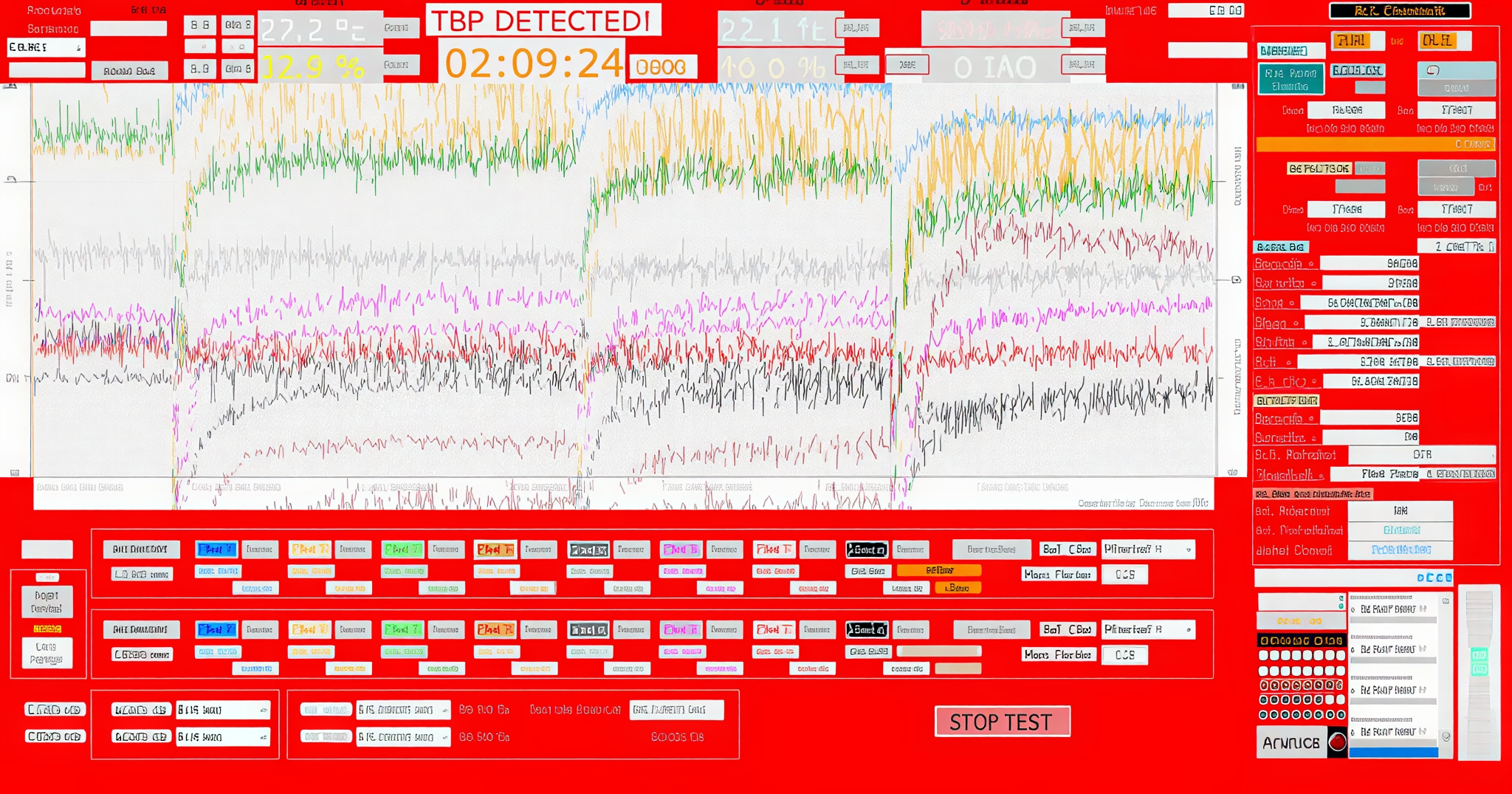
Recorded sensor output from a controlled laboratory experiment involving tributyl phosphate (TBP). The figure illustrates changes in optical sensor response under the experimental test conditions. These results do not, by themselves, establish analytical sensitivity, selectivity, detection limits or suitability for aircraft cabin-air monitoring.

Independent chemical analysis

NPL analytical report

Use the verified document title and link to the correct PDF.

CONTINUING RESEARCH

Building the Scientific Evidence Base

NanoSense Group continues to develop its sensing platform through experimental investigation, technical evaluation and collaboration with scientific and commercial partners.
Further results, independent assessments and supporting publications will be added as they become available and are approved for public release.

Research Collaboration

We welcome discussions with scientific institutions, healthcare organisations and technology partners interested in evaluating potential applications of the NanoSense platform.
THE NEXT APPLICATION

Where could you take NanoSense?

We’re looking for organisations with the expertise, environments and ambition to help turn NanoSense technology into mission-specific sensing solutions.